
Canecto · Book Signals
Bad Blood
by Arne Dahl
The Book Stack gives the answer. The full review shows the reasoning.
The full review
Read beneath the signals
Four editorial views of the book, in the normal reading flow.
01 · Orientation
At a Glance
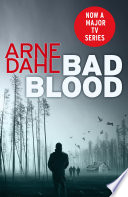
Bad Blood by Arne Dahl is a crime novel set primarily in Sweden and the United States, following members of an investigative team as they track a brutal killer whose pattern of violence crosses borders. Working within a contemporary law-enforcement environment, the investigators confront a series of murders that suggest a calculating perpetrator with a long history. The book’s genre position sits firmly in crime fiction with a strong procedural backbone, where forensic details, investigative leads, and inter-agency cooperation form the core mechanisms. As the case widens, the detectives must interpret cryptic clues and sift through conflicting evidence, creating a reading experience grounded in methodical police work and the unsettling escalation of a predator who always seems one step ahead.
03 · Context
Comparative Context
The central mechanism in Bad Blood is the investigative system itself: police structures, international cooperation, and the procedural steps that move a case from a single crime scene to a larger pattern. Law-enforcement hierarchies, jurisdictional boundaries, and information-sharing protocols all matter, because the killer’s history of violence does not respect national borders. Forensic analysis, interview sequences, and the slow accumulation of evidence shape how the narrative progresses, while internal pressures from superiors and public scrutiny add another layer of tension. The crimes’ brutality fuels political and media attention, which in turn pressures the investigative team to move faster than is comfortable. The investigative bureaucracy intertwines with the personal instincts of the detectives, because the official system alone cannot anticipate a killer who adapts quickly. This interaction between institutional procedure and individual judgment drives the way clues are interpreted, because each new decision can either narrow the field or send the team down a costly blind alley. The cross-border nature of the crime pattern reinforces the importance of inter-agency cooperation, because without shared information the procedural machinery risks fragmenting into isolated efforts that leave the violent offender free to continue.
04 · Decision
Reader Fit — in depth
Best suited for readers who want crime fiction that foregrounds investigation and a steady accumulation of evidence, and who are comfortable with depictions of violence as part of the narrative fabric. Less suited for readers seeking deeply introspective character studies or those who prefer minimal exposure to violent or dark content. A friction point: characterization may feel functional rather than richly layered, with some investigators serving more as roles within the case than as fully explored inner lives, and the brutality of certain crimes may be off-putting. The reward: a methodical, plot-driven pursuit of a dangerous offender, where the satisfaction comes from watching professionals piece together a cross-border pattern of crime and push a complex case toward resolution in a tense, workmanlike way.
Within crime fiction, what separates Bad Blood from many similar novels is its emphasis on the mechanics of investigation across borders rather than on a single city or purely local case. The narrative depends on institutional cooperation, procedural detail, and the logistics of tracking a violent offender whose crimes span different jurisdictions, rather than relying primarily on a lone maverick detective or a purely psychological duel. The book’s focus on the system-level response to violence, and on how official structures cope with a persistent, elusive killer, gives it a distinct texture in a category often dominated by either cozy puzzles or purely character-driven noir.
Your place in this book
Read quietly — or leave something behind.
Community Content
(0)No community content yet for this book.
Be the first to create a meme or share your thoughts!
From one book to the wider library
Continue through the library
Find another book. Discover an unexpected connection.
02 · Experience
Interpretive Commentary
Reading Bad Blood involves engaging with a story that balances procedural detail with moments of sharp impact. The pacing feels measured rather than breathless, allowing space for each new crime scene and lead to register before the next development arrives. The cognitive load sits in the moderate range: readers track multiple investigative threads, shifting locations, and a growing sense of pattern, but the narrative remains accessible and grounded in concrete events. The emotional tone leans toward unease and disturbance, shaped by the recurring presence of violence and the knowledge that the killer may strike again at any time. Narrative distance tends to stay close enough to the investigative team to let readers feel their frustration and urgency, yet not so interior that the book becomes primarily introspective; the focus remains on external actions, clues, and consequences more than extended inner monologue.