

Narrative Signal Profile
At a Glance
Patient Zero by Jonathan Maberry is a serious, fast‑paced bioterror thriller set in contemporary outbreak zones and government facilities, where an engineered pathogen becomes the central threat. The story clearly orbits characters thrown into the first wave of catastrophe, with survival hinging on whether they can identify and stop the weaponized disease before it overwhelms containment efforts. Military units, intelligence operatives, and scientists move through labs, command centers, and infected streets, making split‑second choices that reveal the human capacity for good and evil. As the crisis escalates, the ethical implications of scientific advancements are not theoretical; they are embedded in every decision about how to use research, weapons, and medicine. Heroism and bravery in dire circumstances emerge as defining forces in a world where moral ambiguity in disaster is impossible to avoid.
Comparative Context
The core system in Patient Zero is built around an engineered pathogen and the bioterror plot that unleashes it, establishing world rules for how infection spreads, mutates, and erodes any illusion of safety. Power structures in the form of government agencies, military command, and covert cells determine who controls information, weapons, and scientific resources. These institutions operate alongside social systems of public fear, media pressure, and chain‑of‑command loyalty, so that every tactical move has political and personal fallout. The bioweapon threat drives the ethical implications of scientific advancements, because the same laboratories and funding streams that can create cures can also produce mass‑casualty tools. Command hierarchies and classified projects intertwine with field operations, interrogations, and emergency medical responses, forcing characters to weigh orders against conscience. This network of power and science pressures individuals into choices where moral ambiguity in disaster is unavoidable, exposing the human capacity for good and evil as the outbreak intensifies and survival grows less certain.
Reader Fit
Best suited for readers seeking a serious, emotionally charged bioterror thriller with fast pacing, clear stakes around Survival, and a strong focus on how the Ethical implications of scientific advancements collide with the Human capacity for good and evil. Less suited for readers who want light‑hearted escapism, minimal on‑page threat, or stories that avoid Moral ambiguity in disaster and the darker sides of institutional power. A friction point: the high emotional intensity, recurring scenes of infection and violence, and constant pressure on characters’ values may feel heavy for those preferring puzzle‑driven or purely procedural plots. The reward: a strongly immersive experience of Heroism and bravery in dire circumstances, where character choices under extreme stress matter as much as the outbreak mechanics and where ethical lines are constantly, and meaningfully, tested.
Within modern bioterror and outbreak thrillers, what separates Patient Zero from many similar novels is how strongly its emotional core depends on the collision between Survival and the Ethical implications of scientific advancements, rather than relying only on procedural investigation or spectacle. The narrative clearly treats the Human capacity for good and evil as a central engine of tension, making Moral ambiguity in disaster as suspenseful as the spread of the pathogen itself. Where many action‑heavy stories foreground hardware and tactics, this one consistently returns to Heroism and bravery in dire circumstances and the personal cost of each decision, giving its high‑stakes scenario a notably character‑centered, ethically charged feel.
If this book resonates with you
Books that explore similar ideas and reading experiences.

Readers drawn to this book often connect with stories that explore survival and fragility of civilization.
- Survival
- Fragility of civilization
- Government failures
What this book shares
- Explores similar thematic territory through multiple overlapping elements.
- Focuses on meaning over narrative momentum.
Trade-offs
- May have a different pacing or structural approach.
Why this appears here
- Shares core themes with the current book.
- Explores similar reflective and introspective ideas.
- Often appreciated by readers drawn to quiet fiction.

Readers drawn to this book often connect with stories that explore good vs evil and survival.
- Good vs evil
- Survival
- Resilience of the human spirit
What this book shares
- Explores similar thematic territory through multiple overlapping elements.
- Focuses on meaning over narrative momentum.
Trade-offs
- May have a different pacing or structural approach.
Why this appears here
- Shares core themes with the current book.
- Explores similar reflective and introspective ideas.
- Often appreciated by readers drawn to quiet fiction.
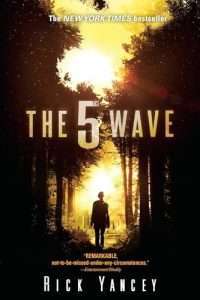
Readers drawn to this book often connect with stories that explore survival and trust.
- Survival
- Trust
- Betrayal
What this book shares
- Explores similar thematic territory through multiple overlapping elements.
- Focuses on meaning over narrative momentum.
Trade-offs
- May have a different pacing or structural approach.
Why this appears here
- Shares core themes with the current book.
- Explores similar reflective and introspective ideas.
- Often appreciated by readers drawn to quiet fiction.
Continue the Reading Path
You've seen the obvious matches. Explore the full ranked map — organized by signals, not just genre.
Your place in this book
Read quietly — or leave something behind.
Community Content
(0)No community content yet for this book.
Be the first to create a meme or share your thoughts!
Interpretive Commentary
Reading Patient Zero often feels urgent, with pacing that is notably fast‑paced and driven by frequent confrontations, investigations, and outbreak responses that keep scenes moving quickly. The cognitive load is notably moderate: there is enough scientific and tactical detail to make the bioterror scenario convincing, but explanations stay clear and accessible so readers can follow the stakes without specialized knowledge. The emotional tone is clearly serious and frequently intense, as Survival, Heroism and bravery in dire circumstances, and the Human capacity for good and evil are foregrounded in scenes of infection, sacrifice, and hard moral trade‑offs. Narrative distance stays close to key operatives and scientists, emphasizing character reactions and internal pressure rather than a detached, global overview. Plot momentum feels steady and forward‑leaning, but the story still makes room for characters to wrestle with the Ethical implications of scientific advancements and the Moral ambiguity in disaster.