
Narrative Signal Profile
At a Glance
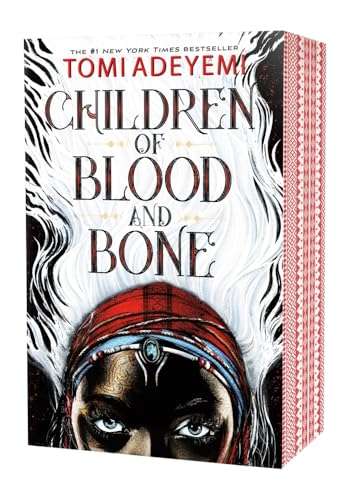
Children of Blood and Bone by Tomi Adeyemi is a character-driven epic fantasy novel set in the West African–inspired land of Orïsha, where magic has been violently suppressed. The story centers on Zélie Adebola, a young divîner whose white hair marks her as a descendant of maji, as she joins a dangerous quest to restore magic using the sacred scroll of Ashe. Alongside her brother Tzain and runaway princess Amari, Zélie must cross Orïsha while evading Crown Prince Inan and the ruthless King Saran, whose brutal raids and taxes keep divîners oppressed. The plot is powered by this chase across Orïsha, shifting alliances within the royal family, and the ticking-clock ritual at the temple of Chândomblé that could either revive magic or doom divîners forever.
Comparative Context
The world of Orïsha runs on a clear social and political divide between divîners, whose magic once came from the gods, and kosidán, the non-magical majority who now hold power. King Saran’s regime uses military force, economic exploitation, and fear to keep divîners marginalized, turning their distinctive white hair into a visible mark of danger. The sacred artifacts of Ashe, especially the scroll and sunstone, function as both magical tools and political flashpoints, because whoever controls them can reshape Orïsha’s future. Zélie’s emerging magic intertwines with Inan’s secret abilities, creating a volatile bond that pressures both the royal court and the resistance. The monarchy’s persecution of maji strongly drives the rebellion brewing in places like Ibeji, because every new act of violence reinforces the need for Social Justice and collective Resilience. Family loyalties inside the palace clash with Friendship and found-family ties on the road, constantly reshaping who can be trusted.
Reader Fit
Best suited for readers looking for an emotionally intense, character-focused epic fantasy that foregrounds Identity, Oppression, and Social Justice through a vivid, West African–inspired setting. Less suited for readers who want relentlessly fast pacing, minimal worldbuilding, or a clear-cut division between heroes and villains. A friction point: the moderate pacing and frequent shifts into trauma, grief, and moral ambiguity can feel heavy, especially as characters repeat painful mistakes or clash over ideology. The reward: deep immersion in Zélie, Amari, and Inan’s inner lives; powerful arcs of Family, Friendship, and Resilience; and a magic-infused world where every choice in Orïsha’s struggle for justice carries real emotional weight.
Within epic YA fantasy, what separates Children of Blood and Bone from many quest-driven novels is how tightly its magic and politics are bound to visible Oppression and Social Justice rather than to abstract prophecy or distant lore. The persecution of divîners is not just backdrop; it shapes every family bond, every friendship, and every romantic tension. Instead of relying mainly on puzzle-like magic systems or twisty court intrigue, the book leans on raw emotional stakes, intimate rotating viewpoints, and the constant question of how far people will go to protect their own Identity and community. That emphasis on lived Resilience in Orïsha’s streets and villages gives the familiar “restore magic” premise a distinctly grounded, urgent feel.
If this book resonates with you
Books that explore similar ideas and reading experiences.

Readers drawn to this book often connect with stories that explore oppression and resilience.
- Oppression
- Resilience
- Identity
What this book shares
- Explores similar thematic territory through multiple overlapping elements.
- Focuses on meaning over narrative momentum.
Trade-offs
- May have a different pacing or structural approach.
Why this appears here
- Shares core themes with the current book.
- Explores similar reflective and introspective ideas.
- Often appreciated by readers drawn to quiet fiction.

Readers drawn to this book often connect with stories that explore friendship and identity.
- Friendship
- Identity
- Mythology
What this book shares
- Explores similar thematic territory through multiple overlapping elements.
- Focuses on meaning over narrative momentum.
Trade-offs
- May have a different pacing or structural approach.
Why this appears here
- Shares core themes with the current book.
- Explores similar reflective and introspective ideas.
- Often appreciated by readers drawn to quiet fiction.

Readers drawn to this book often connect with stories that explore friendship and trauma.
- Friendship
- Trauma
- Love
What this book shares
- Explores similar thematic territory through multiple overlapping elements.
- Focuses on meaning over narrative momentum.
Trade-offs
- May have a different pacing or structural approach.
Why this appears here
- Shares core themes with the current book.
- Explores similar reflective and introspective ideas.
- Often appreciated by readers drawn to quiet fiction.
Continue the Reading Path
You've seen the obvious matches. Explore the full ranked map — organized by signals, not just genre.
Your place in this book
Read quietly — or leave something behind.
Community Content
(0)No community content yet for this book.
Be the first to create a meme or share your thoughts!
Interpretive Commentary
The pacing in Children of Blood and Bone is notably moderate, alternating intense action sequences—raids, escapes, arena fights—with quieter stretches of travel, training, and internal conflict. Cognitive load is also notably moderate: the magic system, Orïsha’s geography, and the pantheon of gods require some attention, but the clear quest structure and focused cast keep the story accessible. The emotional tone is clearly serious and often heavy, with scenes of brutality, grief, and sacrifice foregrounding Oppression and the cost of resistance, though moments of humor and tenderness in Family and Friendship offer relief. Narrative distance stays close and intimate, rotating between Zélie, Amari, and Inan in first person, which pulls the reader directly into their shifting sense of Identity, guilt, and hope. Plot momentum feels moderate overall, with emotional fallout given as much space as battles.